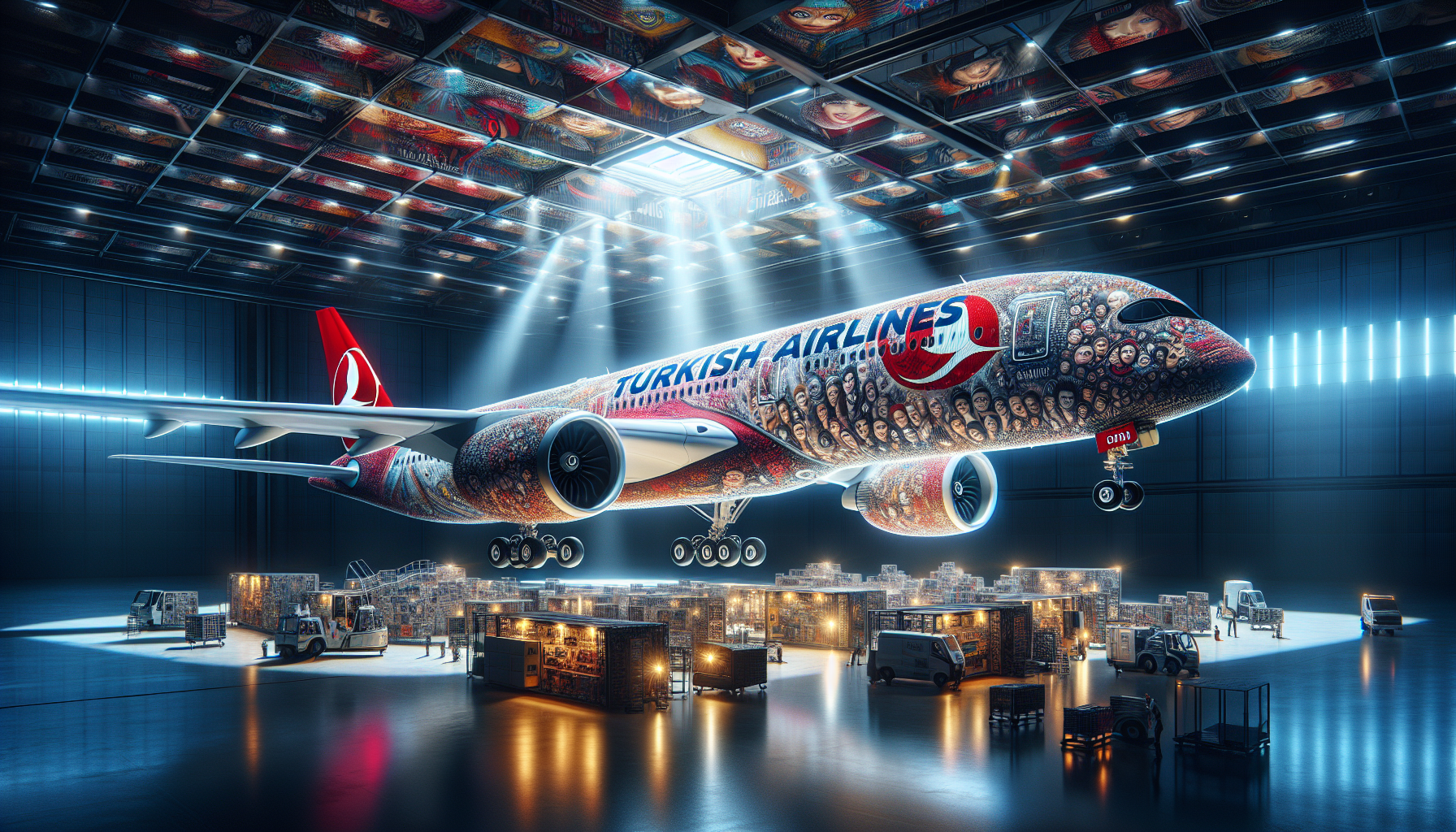
Turkish Airlines Celebrates 500th Aircraft with 100,000 Faces: What This Means for the Future of Brand Marketing
Turkish Airlines has turned heads with its new use of aircraft liveries, placing 100,000 faces on an Airbus A350. This raises the bar for airline branding as companies turn planes into dynamic marketing tools.
Turkish Airlines just raised the bar for airline branding by transforming an Airbus A350 into a moving mosaic of 100,000 faces. This isn't just a plane, it's a flying tribute to the people who've built the airline over the decades. But what's even more intriguing is how this stunt could reshape how companies think about brand marketing.
Celebrating a Milestone with Faces
To mark its 500th aircraft milestone, Turkish Airlines took a year to execute this grand vision, opting for high-grade aviation stickers over traditional paint. This choice was both strategic and practical. Stickers weigh less, cutting down on fuel burn, and they require less time to apply, just five days compared to potentially weeks with paint.
The project involved about 300 pounds of material, painstaking planning for photo placement, and perfect color coordination. Employees are now enjoying a game of 'spot your face' on this flying masterpiece, an element that humanizes the brand in ways static marketing can't.
Branding Soars to New Heights
This isn't a first for airlines. From Pokémon-themed planes in Asia to Southwest's Disney decals, liveries have long been used as mobile billboards. They offer a unique way to attract attention and even generate revenue through partnerships. But Turkish Airlines' approach takes it further, crafting a personalized narrative that's hard to ignore.
And it's not cheap. While decals are less expensive than paint, generally costing in the low tens of thousands before labor, they provide flexibility and longevity that paint can't. The clearcoat over these decals shields them from extreme conditions, making them durable for the long haul.
Is This the Future of Branding?
But what if this idea doesn't catch on? Some critics might argue that the cost-to-benefit ratio still favors traditional advertising methods, especially for smaller carriers that can't afford such grand gestures. There's also the risk that the novelty could wear off or fail to translate into increased ticket sales.
Yet, the viral potential of such a bold move is undeniable. In an age where social media buzz can drive airline choices, the value of unique liveries might just outweigh the cost. What other industry could benefit from such a strategy?
My Verdict
The Turkish Airlines livery may well be a turning point in aviation marketing. It highlights a shift towards personalized and interactive brand experiences. In crypto terms, it's akin to projects that offer real-world utility. the value isn't just in the token or, in this case, the plane, but in the experience it provides.
Ultimately, this could signal a new era where branding isn't just about logos and slogans but about telling deeper stories. Those who embrace this new frontier may find themselves flying higher than their competitors.