Tesla's Trillion-Dollar Market Cap and Lucid's Bold Software Gamble: What's Next?
Tesla's soaring market cap hinges on self-driving tech, but Lucid's audacious shift to software sales. Is this the future of EVs or a risky bet?
Tesla's market cap has shot past $1 trillion. Yes, that's trillion with a 'T'. It’s not just the biggest electric vehicle (EV) stock, but it's a colossal player in any industry. The stock's valuation isn't just about cars. It's about ambitious self-driving tech and the dream of robotaxis. Some breathless experts are even predicting a $10 trillion global opportunity in that space. But is it all as rosy as it sounds?
The Tesla Phenomenon
Let's talk about Tesla first. The company didn't just become a trillion-dollar behemoth by selling electric cars. Their secret sauce? Self-driving technology. This tech is the backbone of their robotaxi ambitions. Imagine a world where cars drive themselves, and you can summon a taxi with an app, minus the driver. That's Tesla's vision. And the market's buying in, big time.
But, here's the thing. This massive valuation rests on something that, for now, is still more promise than reality. Sure, Tesla's self-driving features are impressive. Yet, full autonomy remains elusive. And until everyone can hop into a driverless car, there's a risk Tesla's valuation is puffed up by hopium.
Lucid's Big Bet on Software
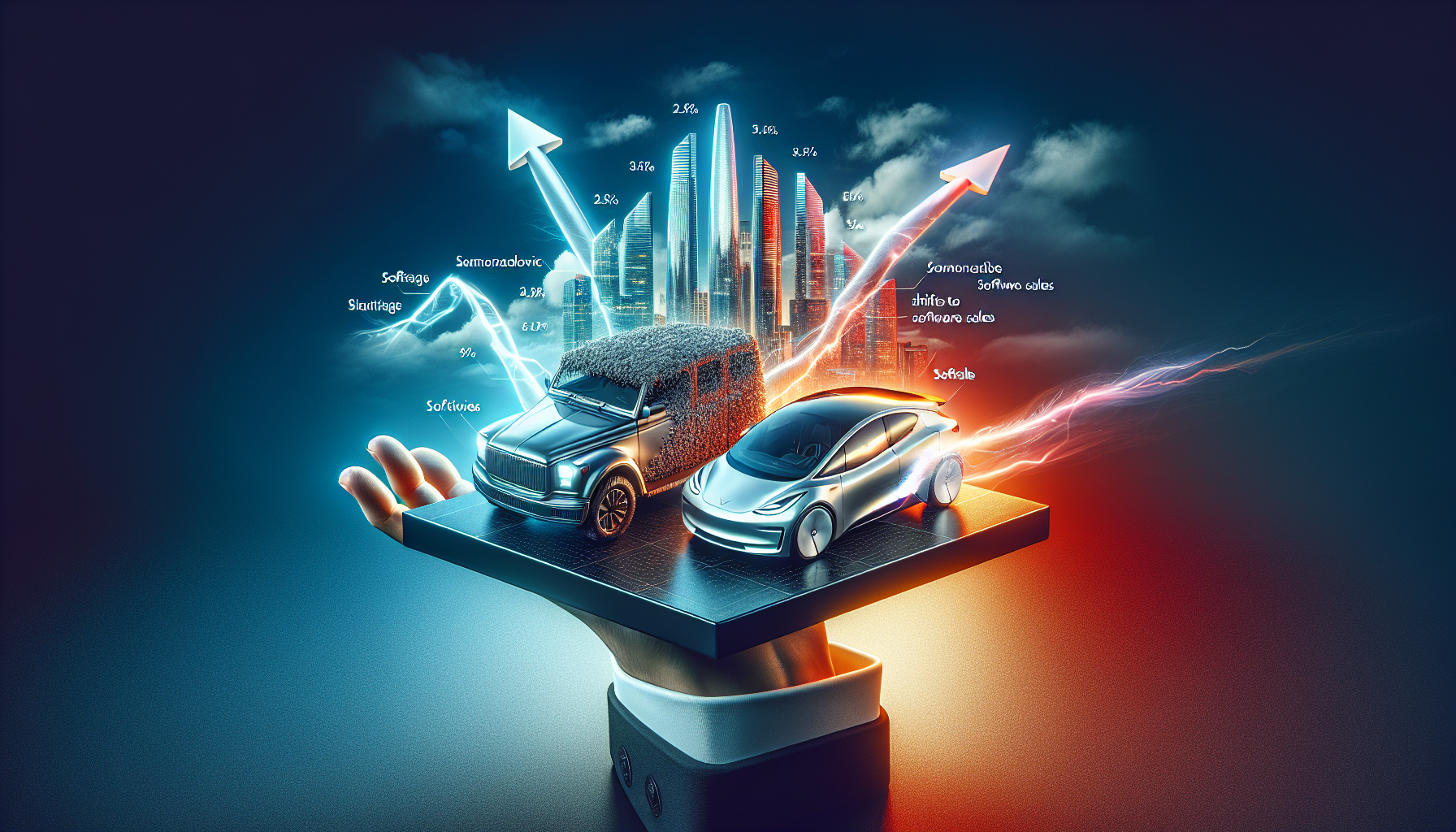
Now enter Lucid Group. Valued at around $3 billion, it's a tiny fish compared to Tesla's trillion-dollar whale. But they're dreaming big. Lucid doesn't just want to sell cars. Oh no. They want to reinvent themselves as a technology company. By 2027, they expect only 20% of their revenue from vehicle sales. The rest? Software. Yes, that's right. Lucid plans to peddle their tech to other automakers.
But can Lucid pull it off? It's a bold move, given the company's current size. Shifting focus from manufacturing to software sales is no small feat. Remember, not every automaker wants to buy tech from a potential competitor. And while software's a high-margin business, it's also fiercely competitive.
The Crypto Angle and The Winners
So, here's the question: how does all this relate to crypto? Think of Tesla's embrace of tech as a parallel to blockchain's disruptive potential. Both industries are driven by innovation and a touch of idealism. But innovation isn't enough. There's a practical side too. For investors in crypto, understanding these tech shifts in automakers could provide valuable insights.
Winners in this scenario? Tesla, if they can deliver on those robotaxi promises. Their market cap shows that investors are betting big on their tech. Lucid, if they manage to pivot successfully, could be a surprise success story. But that's a big if.
So who loses? Traditional automakers clinging to old models. They're at risk of being left in the dust as tech-driven companies redefine the auto industry. And investors who can't see beyond the hype may end up the biggest bag holders.
In the end, it's a tale of two approaches. Tesla's riding high on future dreams. Lucid's trying to bet the farm on a software pivot. Both are chasing the next big thing. But remember, everyone has a plan until liquidation hits. The data already knows it. And in this volatile space, optimism alone won't save you. Math, on the other hand, never lies.