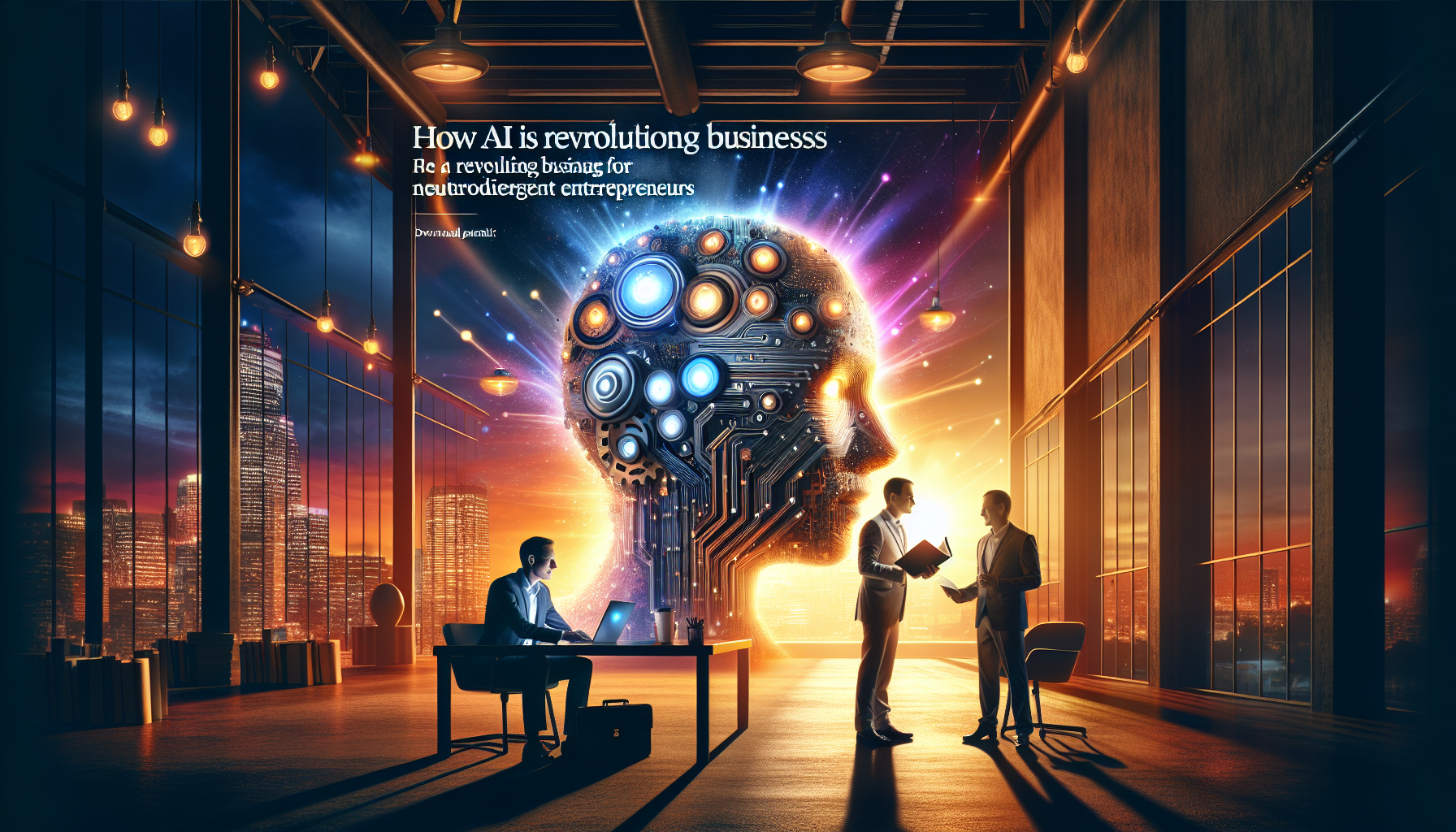
How AI is Revolutionizing Business for Neurodivergent Entrepreneurs
AI is more than just a tool for tech-savvy entrepreneurs. It's become an essential partner for neurodivergent individuals like Rita Ramakrishnan and Chris Haddox, who are leveraging AI to overcome challenges and grow their businesses.
Can artificial intelligence truly level the playing field for neurodivergent entrepreneurs? For some, it’s not just a possibility, but a reality. AI has become a silent partner in the businesses of individuals like Rita Ramakrishnan and Chris Haddox, who are using AI to compensate for their challenges and amplify their strengths.
The Data: AI in Action
Rita Ramakrishnan, who runs Iksana Consulting, has seen a 20% increase in revenue since integrating AI into her business operations. Chris Haddox, founder of DECOY LTD, juggles a full-time job while managing his growing clothing brand, all thanks to AI. These numbers aren't just wins for their businesses, but also victories in the broader economic market for neurodivergent individuals.
AI tools like Anthropic's Claude and Google's Gemini have become indispensable in organizing their chaotic worlds. For Ramakrishnan, AI manages her schedule, optimizing tasks around her fluctuating energy levels. AI figures out when her high-energy spots are best for creative tasks like writing proposals.
Context: Why It Matters
Historically, neurodivergent individuals have faced an uphill battle in the business world. Traditional schedules and organizational expectations often clash with how their brains work. But now, AI offers a workaround. It’s not just about making life easier. it's about reshaping what's possible. If AI can compensate for human limitations, who's to say what the limits really are?
This isn't just a story about individual success. It's how technology can dismantle barriers that many considered insurmountable. It opens up the conversation about inclusivity and innovation, turning what some see as limitations into opportunities for creativity and growth.
Opinions from the Inside
According to industry insiders, the use of AI by neurodivergent individuals could set a precedent. Paul Brody, a tech analyst, notes that the potential market for AI-driven solutions is massive. "AI doesn’t just make businesses more efficient, it can actually redefine the playing field," he said. Traders are watching closely as more entrepreneurs like Ramakrishnan and Haddox prove AI’s worth beyond the tech bubble.
But here's the thing: AI isn’t just a crutch. It’s a catalyst for innovation. Ramakrishnan uses it not merely to organize her schedule but to improve her people skills, an area where she admits to struggling due to her autism. AI helps her prepare and rehearse for meetings, turning potential awkwardness into confidence.
What’s Next: The Future of AI for Entrepreneurs
The field is wide open. With AI tools becoming more accessible and customizable, the potential for neurodivergent entrepreneurs is enormous. The next big step? More personalized AI solutions that adapt to individualized needs. Startups focusing on AI for neurodiversity might just find themselves on a lucrative path.
But let’s not get ahead of ourselves. AI isn’t a magic wand. It’s a tool, and like any tool, its success depends on how you use it. Entrepreneurs need to stay informed, vigilant, and adaptable. The market is evolving quickly, and those who can't keep up might find themselves left behind. Naturally, this calls for ongoing education and adaptation. A roadmap wouldn’t hurt, but spare me the fluff. We’re talking about real change.