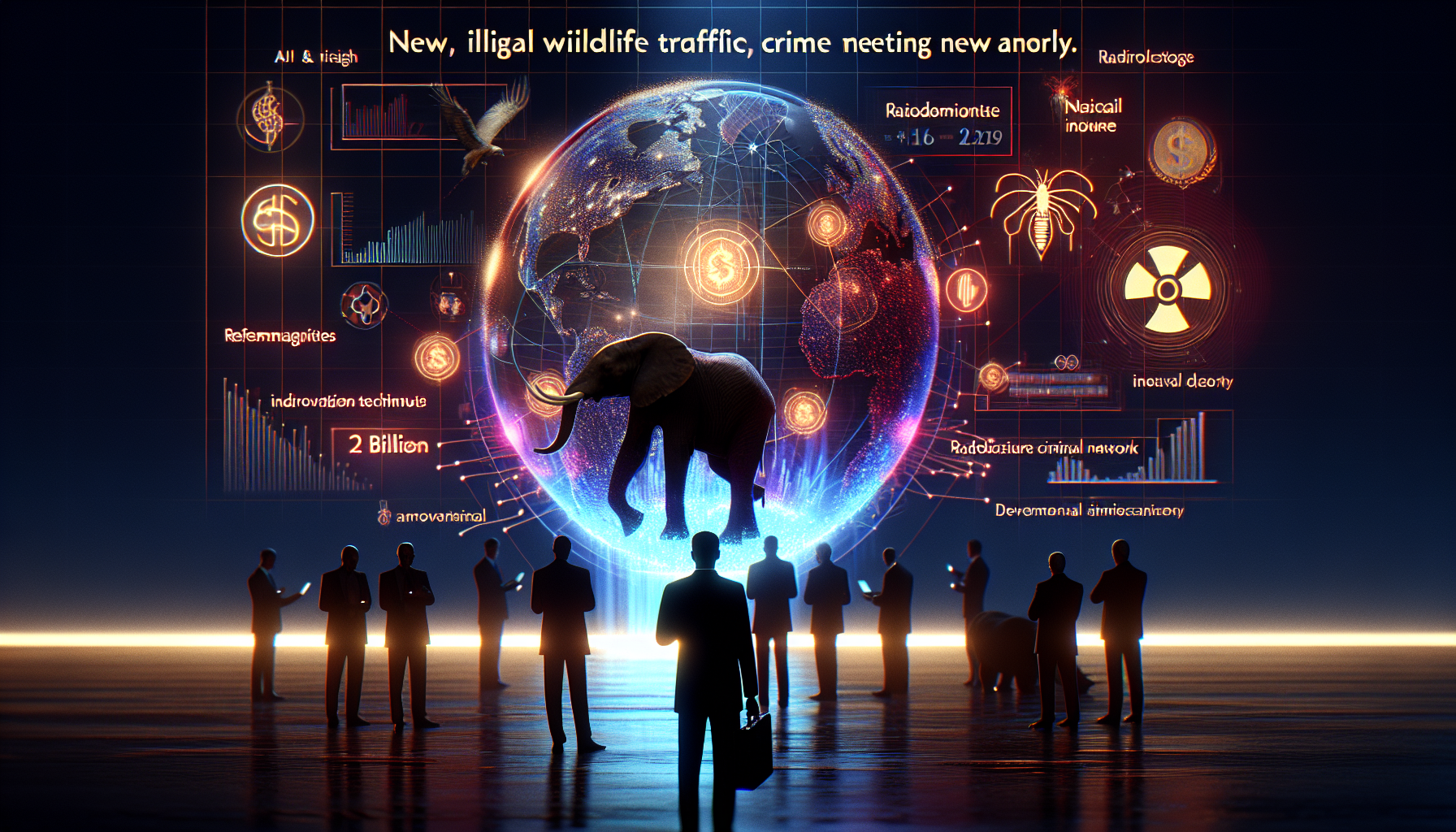
Wildlife Crime Meets new Tech: How AI and Isotopes Are Battling a $20 Billion Enterprise
Illegal wildlife trafficking, valued at $20 billion annually, faces new challenges as technology steps up. From AI to radioactive isotopes, fresh measures aim to disrupt this elusive criminal network.
How can we truly combat the global menace of wildlife trafficking, a $20 billion annual enterprise? As poachers and smugglers refine their tactics, technology might just be the big deal conservationists have been hoping for.
The Facts and Figures
Wildlife trafficking ranks as the fourth-most-lucrative criminal enterprise, trailing only behind the trafficking of drugs, weapons, and humans. According to Interpol, this illegal trade sees hundreds of rhinos shot each year, millions of sharks pulled from protected waters, and a vast array of animals and plants smuggled across borders. Despite efforts to curb this activity, enforcement agencies have been outmatched by criminal networks skilled at evading capture.
Interpol's Operation Thunder 2025, however, offers a glimmer of hope. With the cooperation of 134 countries, the operation seized a record 30,000 live animals using advanced technologies like digital forensics and AI-driven detection. This demonstrates that modern threats do indeed require modern solutions.
Historical and Cultural Context
This isn't just about the illegal trade in rare animals and plants. It's a story about money. As long as a rhino horn can fetch $60,000 per kilogram on the black market, the incentive to break the law remains strong. Historically, wildlife has been seen as both a status symbol and a resource for traditional medicine, driving demand in ways that make smuggling highly profitable.
The United Nations aims to end trafficking in protected species by 2030, yet a recent report by the UN Office on Drugs and Crime offers little confidence in reaching this target. But here's the thing: pull the lens back far enough, and you can see a pattern where technological innovation begins to change the narrative.
Tech to the Rescue?
Recent technological advancements are changing the game, from AI to radioactive markers. The Rhisotope Project in South Africa, for instance, involves implanting rhinos with low-level radioactive isotopes that make their horns detectable by radiation monitors. This method, costing $1,300 per animal and effective for five years, aims to make the horns worthless to smugglers.
Meanwhile, in Australia, x-ray fluorescence guns are analyzing elemental signatures in animal keratin to determine if they come from wild or captive-bred stocks. It's a strategy aimed at disrupting illegal trade in species like short-beaked echidnas, which are suspiciously labeled as “captive-bred” when export numbers far exceed what's realistically possible.
Then there's Skylight, an AI tool analyzing satellite and ship-tracking data to spot illegal fishing activities. This tool, developed by the Allen Institute for AI, has already helped Panama seize ships illegally fishing within marine reserves in early 2025.
What Lies Ahead
So, what's next on the horizon for these technologies? For one, the Rhisotope Project seeks to expand its radioactive tagging to other animals and plants, including elephant tusks and cycads. AI-driven tools like Skylight show potential for broader adoption, particularly in the Global South where enforcement resources are sparse.
There's a growing consensus that these clever approaches aren't just flashy add-ons but are essential components in the fight against wildlife crime. The proof of concept is the survival. When you start seeing tangible results, like significant seizures and arrests, it becomes clear that these aren't just experimental tools, they're potentially transformative.
But here's the crux: can these technologies outpace the ever-evolving strategies of sophisticated criminal networks? It's a race against time, but one thing is clear: to enjoy crypto or any advanced tech, you'll have to enjoy failure too. Only through trial and error do we develop the reliable solutions necessary to curb one of the world's most elusive and lucrative black markets.