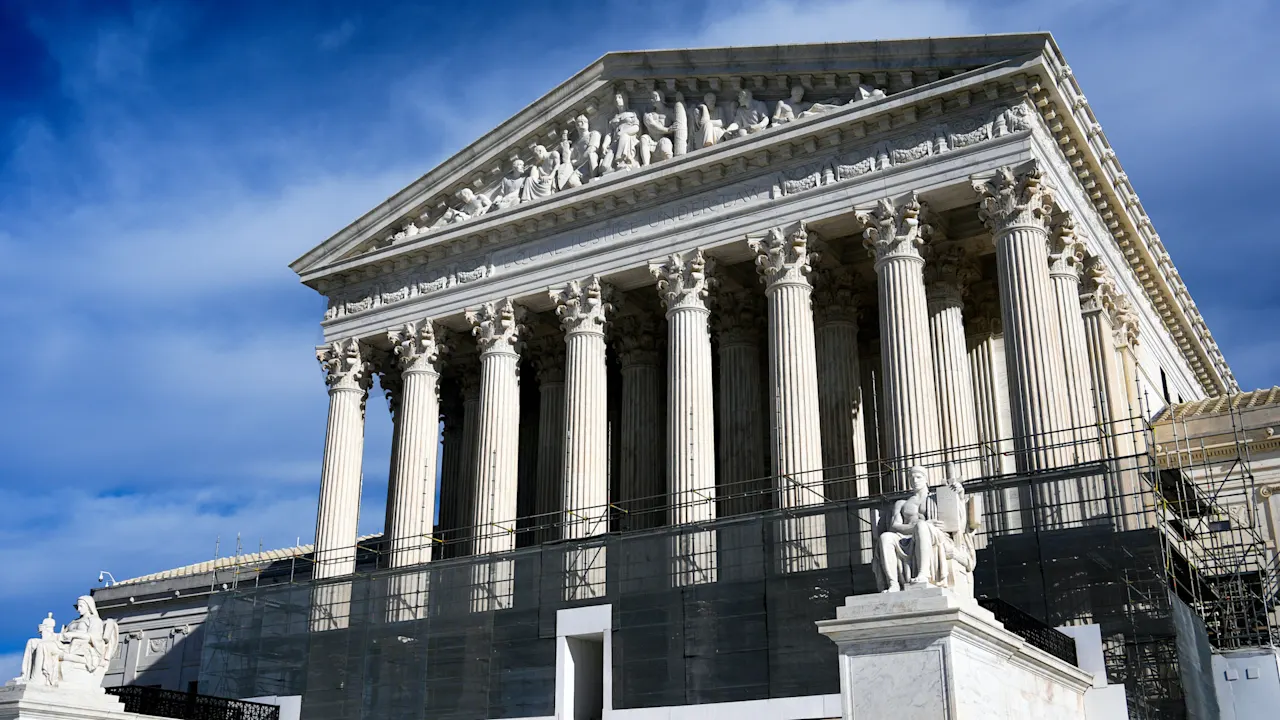
Supreme Court's Tariff Ruling: A 10% Global Tax on Trade?
The Supreme Court's recent decision against Trump's global tariffs marks a significant shift in U.S. trade policy. As new tariffs loom, businesses brace for a complex economic landscape.
The Supreme Court's decision to strike down President Trump's extensive global tariffs has sent shockwaves through the business community. This ruling, decided by a 6-3 vote, serves as a wake-up call for companies navigating the tumultuous waters of U.S. trade policy. Trump, clearly displeased, hinted at imposing a global 10% tariff as an alternative. For all the talk of tariffs, this ruling might just herald a new era of unpredictability in international trade.
Trump's Reaction and the Alternative Tariffs
Trump's response was predictably fiery. He declared himself "absolutely ashamed" of the justices who voted against his tariffs, claiming the ruling was "deeply disappointing." The president emphasized his belief that the Court's decision was wrong but vowed to explore alternative avenues for enacting tariffs. His proposed global 10% tariff would be enacted under a law limiting such actions to 150 days, a timeline that gives businesses little time to adapt.
This isn't just a political setback for Trump. It showcases the fragility of his trade agenda, which was a cornerstone of his presidency. The business community is looking for stability, and the uncertainty surrounding these new tariffs will undoubtedly create headaches. For manufacturers who depend on importing materials, the stakes are high. Trump's promise of powerful alternatives might not be as effective as he hopes.
The European Perspective: Confusion and Concern
On the other side of the Atlantic, the reaction from Europe is illuminating. The European Commission had previously negotiated a deal with the Trump administration, capping tariffs on European imports at 15%. This concession provided a level of certainty that helped European countries, particularly those using the euro, avoid recession last year. Now, that stability is thrown into disarray.
The German Chamber of Commerce encapsulated the sentiment when it warned about the high levels of uncertainty facing businesses exporting to the U.S. Those companies that once felt a sense of security now find themselves bracing for potentially more targeted tariffs that could affect various sectors, from pharmaceuticals to auto parts. Carsten Brzeski, a macroeconomic expert, made an astute observation: even if the legal basis for Trump's tariffs changes, the economic impact could be just as severe, if not worse.
Brazil's Optimism Amid Uncertainty
Meanwhile, Brazil has taken a surprisingly optimistic stance. The South American nation intends to continue its trade negotiations with the U.S., despite the recent ruling. Brazil's Vice President and Industry Minister, Geraldo Alckmin, expressed confidence that the Supreme Court's decision would actually strengthen trade discussions. He noted that a uniform 10% tariff means Brazil wouldn't be at a competitive disadvantage compared to countries facing lower tariffs.
This perspective is interesting. It highlights how the ruling can present both challenges and opportunities. While some American businesses, like Michigan's skinnytees, brace for increased costs, Brazil sees a chance to regain lost ground in negotiations. Alckmin's comments show a level of strategic thinking that could benefit Brazil in the long run. Trade dynamics are always shifting, and Brazil seems ready to capitalize.
The Impact on American Businesses: A Mixed Bag
The Supreme Court ruling has sparked anxiety among American businesses. Linda Schlesinger-Wagner, owner of skinnytees in Michigan, voiced skepticism over the ruling's impact, saying, "He'll find some way to get around this." She estimates her company's losses from tariffs at around $1 million, a significant hit for a small business heavily reliant on Chinese imports. The threat of new tariffs looms larger now, raising questions about pricing and competitiveness.
This situation highlights a broader issue. Companies are caught in a web of policy changes and unpredictability. With Trump suggesting he won't back down easily, businesses must prepare for potentially rising costs and shifting market dynamics. As companies navigate this landscape, they’ll need to adopt agile strategies that account for both tariffs and broader economic trends.
So, what does this all mean? The Supreme Court ruling is more than just a legal decision. It sends ripples throughout the global economy. U.S. businesses are in a precarious position, navigating uncertainty while trying to maintain their competitive edge. Meanwhile, international players like Brazil are poised to seize opportunities amid chaos.
In the grand scheme, what’s clear is that trade relations are far from straightforward. In the coming months, all eyes will be on how companies adapt to these changing policies, and whether Trump's alternative tariffs will materialize or fizzle out like a damp firework. The economic landscape is shifting, and it demands careful consideration from all stakeholders involved.