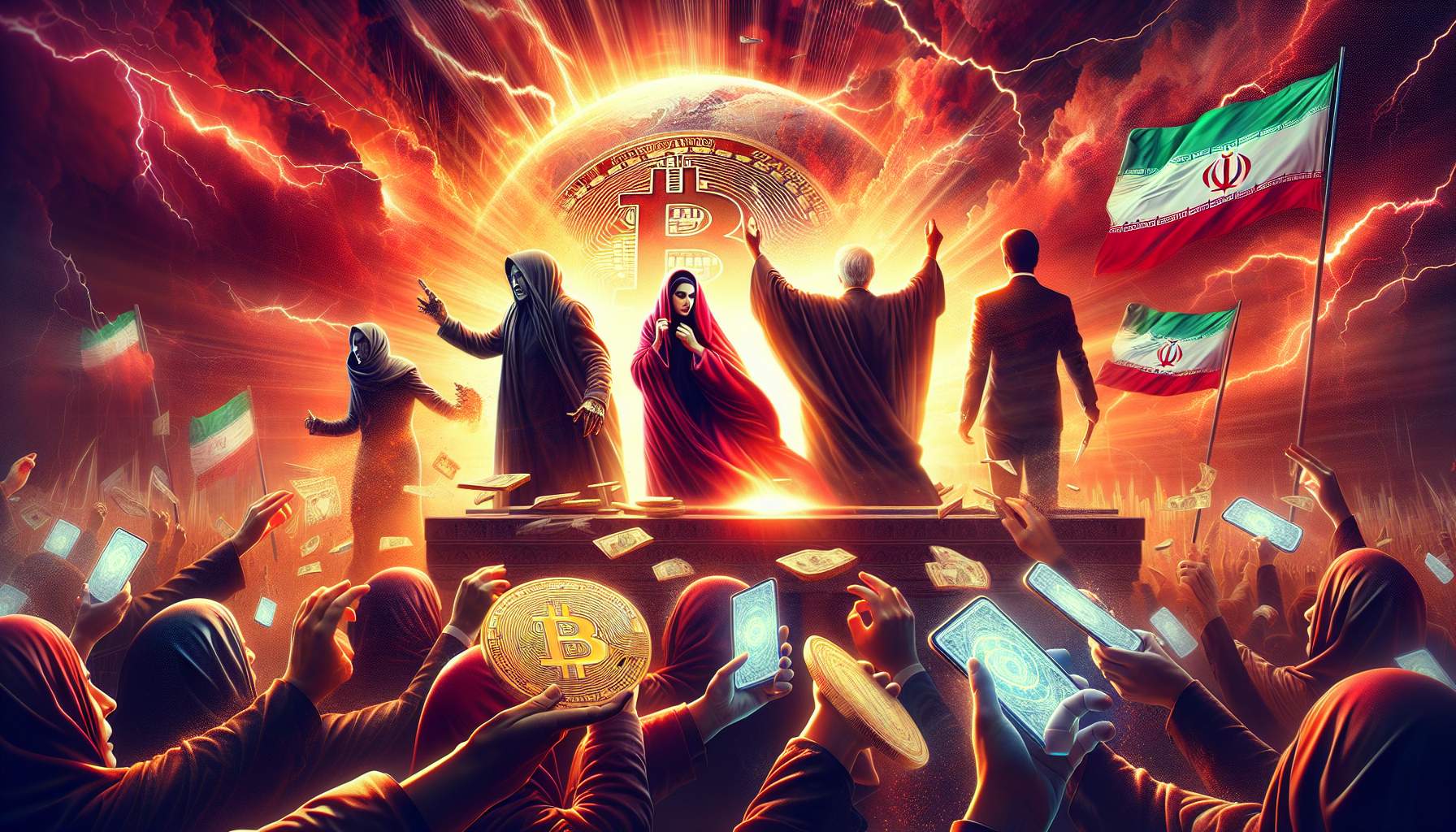
Iran's Future: A Reshaping of Power and Its Impact on Crypto Markets
As Iran faces a leadership void, the potential for economic upheaval could ripple through crypto markets. The role of figures like Reza Pahlavi and the Revolutionary Guard could redefine monetary policy and digital currency usage in the region.
The death of Iran's Supreme Leader has sent shockwaves through the geopolitical arena, with a unique opportunity for economic and digital transformation on the horizon. The question isn't just who will take control but how this shift will influence Iran's economic strategies, especially its stance on cryptocurrencies.
Evidence: The Power Vacuum and Digital Aspirations
With Iran's leadership in question, key players are emerging as potential candidates for power. Reza Pahlavi, a figure with historical significance, offers a connection to pre-revolutionary Iran, promising a return to economic stability. Insiders like former President Rouhani hold sway with existing institutions, while the Revolutionary Guard remains a formidable force with its influence rooted in the country's economic and political fabric.
Iran's existing economic struggles, compounded by sanctions, have pushed it towards alternative financial systems. Cryptocurrencies have been particularly appealing, offering a pathway to bypass traditional economic constraints. In 2020, Iran accounted for an estimated 4.5% of Bitcoin mining, reflecting both interest and necessity in digital currencies.
But what's at stake? The country's economic future is deeply tied to who seizes power next. A progressive leadership might embrace the utility of digital currencies in circumventing sanctions and attracting foreign investment.
Counterpoint: Potential Pitfalls in the Digital Shift
However, not all paths lead to prosperity. A leadership shift towards more conservative forces, like the Revolutionary Guard, could entrench capital controls, limiting the potential benefits of cryptocurrencies. There's a risk that these powerful groups could view crypto as a threat to their fiscal sovereignty, choosing instead to clamp down on decentralized financial systems.
while digital currencies offer an alternative to sanctions, they introduce volatility and regulatory challenges. The reserve composition matters more than the peg, and an unstable currency pegged to volatile cryptos might exacerbate the country's economic woes rather than alleviate them.
The Verdict: A Tentative Embrace of Digital Potential
In weighing these factors, it's clear that Iran's future isn't just a political question but an economic one, with digital currency policy at the forefront. If figures like Reza Pahlavi with a vision for modernization gain influence, Iran could see significant integration of cryptocurrencies into its economy. This shift would potentially position Iran as a leader in the digital monetary space, appealing to nations under similar fiscal challenges.
However, the specter of conservative dominance can't be ignored. It could lead to stricter controls and a return to insular financial practices. Every CBDC design choice is a political choice, and Iran's leadership will have to navigate this delicate balance.
The dollar's digital future is being written in committee rooms, not whitepapers. As Iran stands at this crossroads, the decisions made will ripple through global crypto markets, impacting everything from mining operations to currency valuations. Iran's next steps aren't just critical for its citizens but for anyone vested in the future of digital finance.