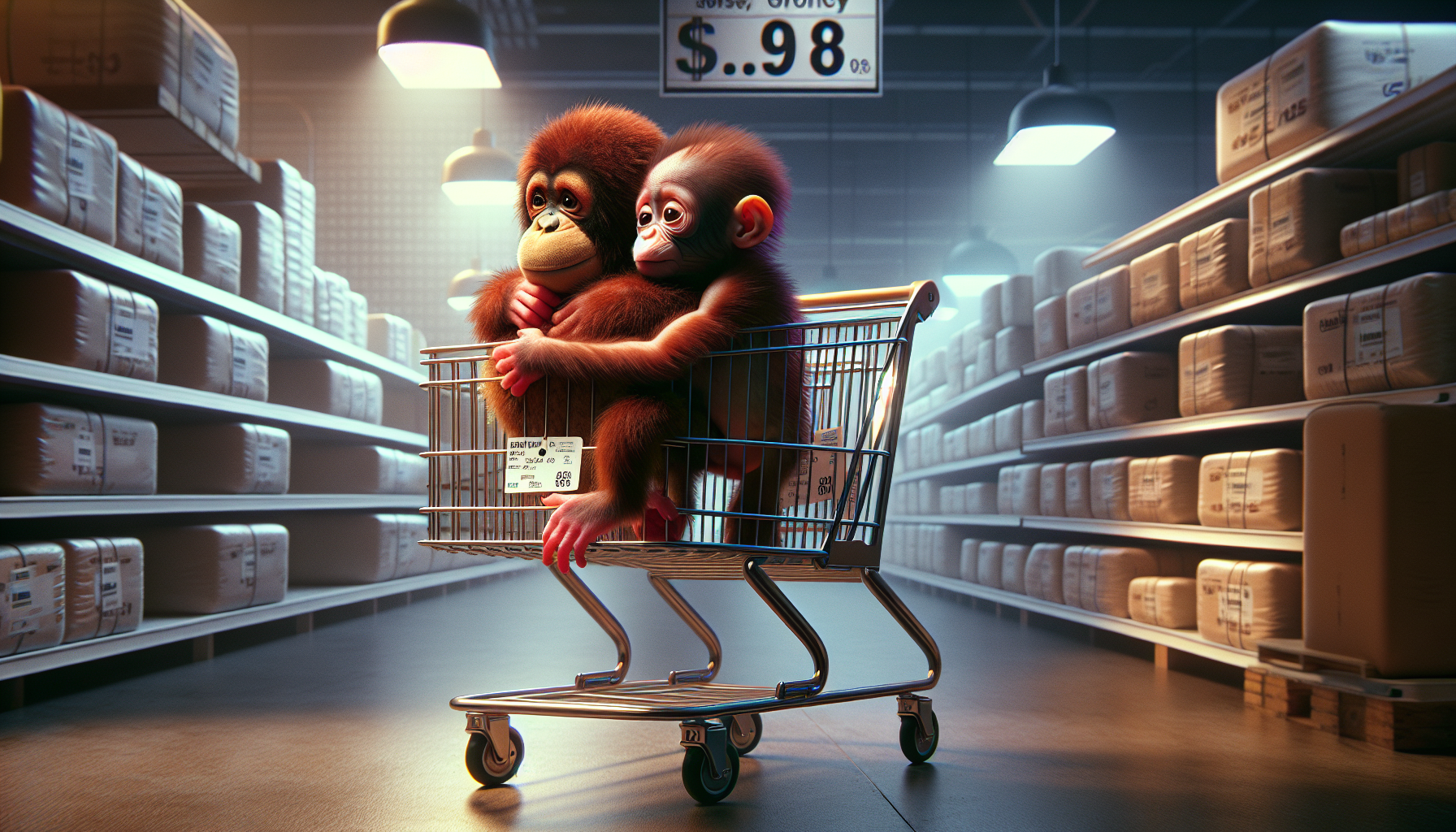
How a Viral Monkey and Ikea Toy Sparked a Resale Frenzy: The Unexpected Market Impact
A baby monkey and its Ikea orangutan plush have sparked a global craze. Discover how TikTok fame led to a resale frenzy and what this means for consumer behavior.
Here's the thing, when a baby monkey turns an Ikea toy into a viral sensation, it doesn't just tug at heartstrings, it through retail and resale markets. Punch, a seven-month-old Japanese macaque, became a TikTok star after videos showed him clinging to a $19.99 Djungelskog orangutan plush from Ikea. This isn't just internet fluff. it's a case study in how digital moments can throttle real-world demand.
The Viral Saga of Punch
The story kicks off in Japan, where Punch was abandoned by his mother at birth and later rejected by his troop at Ichikawa City Zoo. To comfort him, zookeepers offered an Ikea plush, which he didn't take long to embrace. Videos of Punch with his plushie gathered millions of views on TikTok. Viewers were drawn to this lonely monkey's plight, and the plush orangutan quickly became an object of desire. A hashtag translating to "hang in there, Punch" started trending, rallying global support.
The popularity of Punch translated directly to the toy's demand. Javier Quiñones from the Ingka Group confirmed a spike in sales of the Djungelskog plush, particularly in Japan, the US, and South Korea. The toy's viral fame led to it being out of stock in several locations, leaving Ikea scrambling to keep shelves stocked. But the story doesn't end here. demand spilled over onto resale platforms, where prices surged to as much as $328, far beyond the original retail price.
Analyzing the Market Ripple Effect
So, what's the big takeaway here? The intersection of social media virality and consumer behavior is reshaping traditional retail landscapes. The sudden demand for the Djungelskog toy shows how global markets can be swiftly influenced by viral internet phenomena. For companies like Ikea, this is both a blessing and a logistical challenge. On one hand, it's free advertising. On the other, it stresses supply chains and inventory management.
Who wins and who loses in this scenario? Ikea benefits from increased brand visibility and product desirability. Resellers, too, see a windfall as they capitalize on scarcity-driven demand. However, regular consumers hoping to buy the toy face inflated prices, making this a lose-lose for those just wanting a cute plushie for their kids.
But here's the kicker: this isn't merely about toys. It's a bellwether for how markets can adapt, or fail to adapt, to sudden shifts driven by social media. The real lesson isn't about plushies but about agility in supply chain management and the potential for digital platforms to dictate retail success or failure.
A Plushie Phenomenon and Its Lessons
Is this the new normal for retail? Viral moments translating into tangible market impacts might become more frequent as digital and physical worlds continue to blend. Companies would do well to stay nimble and predictive in their strategies, bracing for unexpected demand surges. After all, nobody's tokenizing a plushie for speculation, but the impact on market dynamics is very real.
In the end, Punch and his Ikea toy aren't just a viral curiosity. they're a reminder of how interconnected today’s world is. Retailers, take note: a single video could skyrocket demand overnight. And for consumers and collectors alike, the story of Punch is a fascinating study in how our digital lives increasingly drive our physical desires.