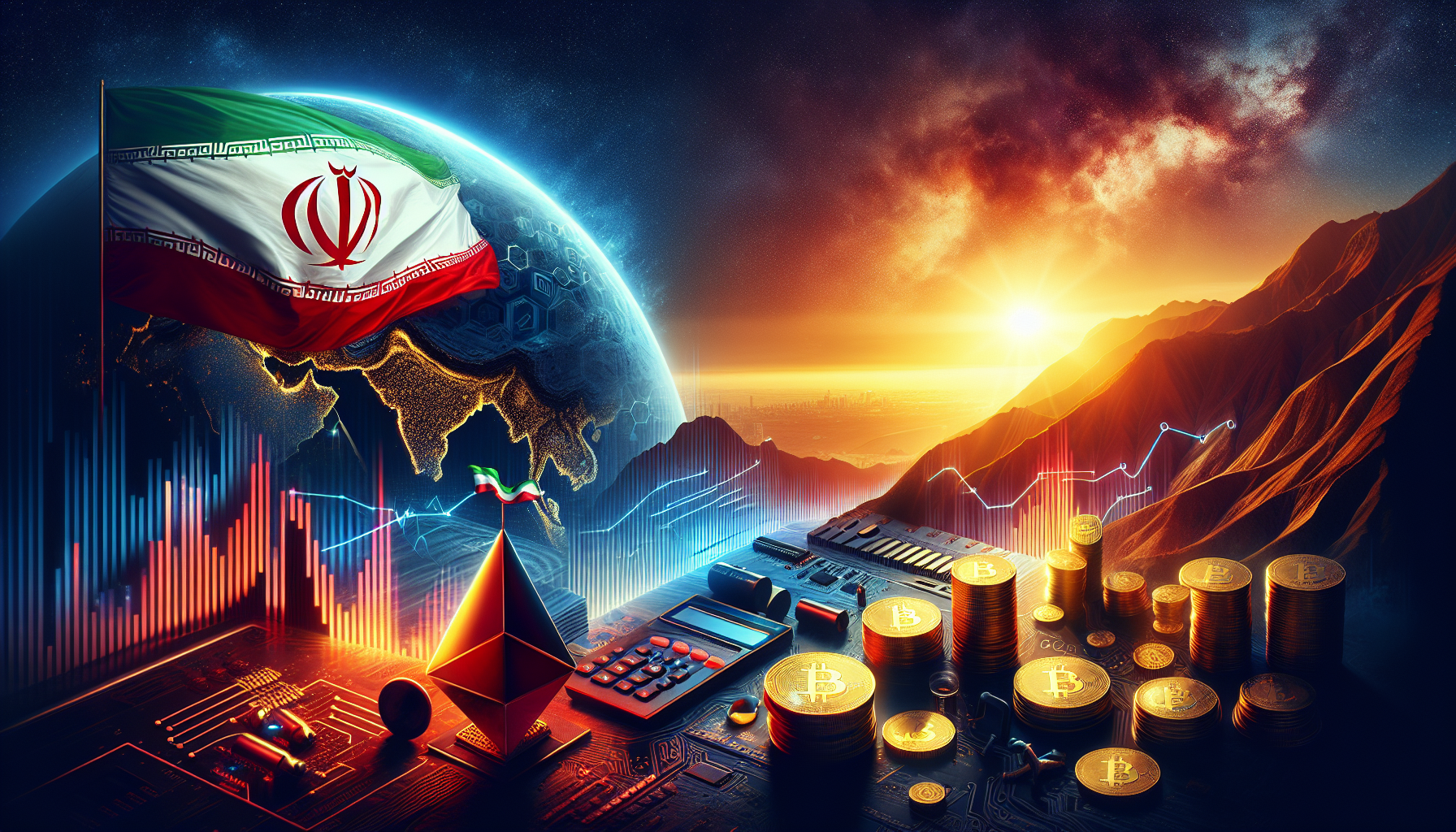
Could Iran's Conflict Nudge Crypto Into New Opportunities?
Despite geopolitical tensions in Iran, experts predict only a modest economic impact. With traditional markets unfazed, what could this mean for crypto's role?
I was just sipping my morning coffee when I caught a headline about the conflict in Iran. It struck me as another geopolitical hiccup that might make some waves but not a tsunami. Here's the thing: while traditional economists are brushing it off as a 'modest macro-economic shock,' I'm thinking, what about the world of crypto?
The Mechanics and Why It Matters
So, let's break it down. According to experts like Sajjid Chinoy, the head of Asia Economics at a major financial institution, this conflict isn't expected to derail the global economic train. The reasoning is pretty straightforward: the fundamentals of global expansion are still strong despite the turbulence. Given that the global economy runs on multiple engines, trade, technology, and yes, money, the idea is that it can absorb a shock from a single region like Iran. That's the macro view. But here's a twist: while the traditional markets might just shrug it off, crypto often thrives on uncertainty.
Let's talk numbers. While exact figures on how this may affect crypto aren't available, history shows that turmoil often leads to a spike in crypto activity. When traditional assets look shaky, people turn to crypto as a hedge. Take hyperinflation scenarios in places like Zimbabwe or Venezuela. We've seen Bitcoin become a lifeline, and Iran's tension might just create another such corridor for crypto adoption.
Broader Implications for Markets
What does this mean beyond the immediate impact on economies? For one, it could push even more people to consider Bitcoin and other cryptocurrencies as viable alternatives. Imagine a world where geopolitical risk is just another reason to diversify into digital assets. It seems like every time there's a crisis somewhere, crypto gains a little more credibility. And it's not just a trend among individual investors. Big institutions have already started to dip their toes in the crypto waters, viewing it as an uncorrelated asset.
And let's not forget Africa. The continent isn't waiting to be disrupted. It's already building. Mobile money came first. Crypto is the second wave. Could this make a stronger case for crypto's role in remittances and cross-border transactions? It certainly seems plausible. As more Africans become mobile-native, the market for crypto might just expand exponentially. After all, trading naira for Bitcoin or cedi for Ethereum isn't just a whim, it's increasingly practical.
My Take: What's Next?
Now, looking at all this, what should we really take away? First, don't expect crypto to be just a side note in situations like this. It's already playing a bigger role than many think. When political tension rises, there's always a chance for crypto to step into the spotlight. But will it be enough to push mainstream adoption further? Maybe. Or maybe not. It depends on how well the crypto community can seize the moment.
In my opinion, the real winners could be the early adopters who see this as more than just a speculative play. They're seeing the cracks in traditional systems as an opportunity for crypto to shine. So, should you jump headfirst into crypto because of geopolitical tensions? Probably not without doing some homework. But ignoring it altogether might mean missing out on something big.
In the end, while the conflict in Iran might be just a blip for traditional markets, it could well be a turning point for crypto. The agent banking network might not fully grasp this, but there's a youth bulge that's ready to explore digital currencies. Forget the unbanked narrative. These users are more mobile-native than most Americans. So, keep an eye on how this unfolds. It just might redefine how we think about global finance.