AI's Real Revolution: Farms, Mines, and Trucks to Profit as Software Hype Fizzles
While many debate AI's impact on white-collar jobs, the true beneficiaries may be the physical industries. From farms to mines, AI could transform labor landscapes.
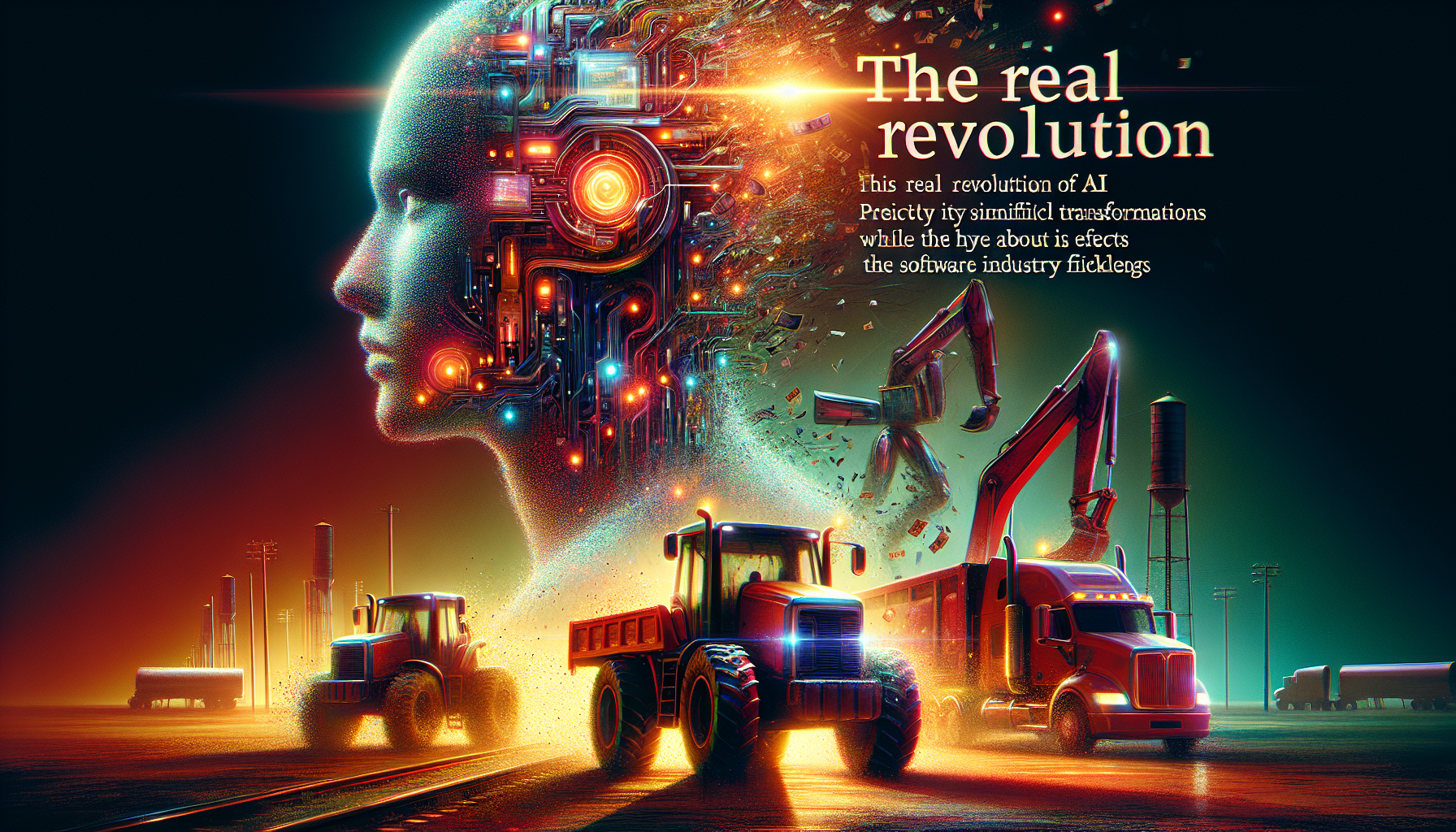
AI's most significant impact won't be where you'd expect. It's not in glitzy software solutions or coding marvels, but in the gritty, physical world of farms, mines, and trucks that the AI revolution will truly take root. As physical industries face mounting labor shortages, the opportunity for AI to step in has never been more apparent.
The Case for AI in Physical Industries
Qasar Younis, CEO of a $15 billion AI firm, argues that the next decade will witness AI's most transformative effects away from the digital interfaces. His company, Applied Intuition, has secured $600 million in funding, underscoring the market's appetite for AI solutions tailored to physical realities, not just virtual ones. Think about this: the average farmer's age is pushing 60, and the trucking industry struggles to entice new drivers. What will replace this aging workforce?
Younis suggests AI isn't about replacing workers but augmenting capabilities. In farming, AI can optimize planting and harvesting, allowing fewer hands to manage larger areas. In trucking, self-driving technology promises to alleviate the constant pressure of finding drivers willing to take on grueling routes.
Challenges and Misconceptions
Yet, not everyone is sold on AI's potential to revolutionize these industries. Critics point to technical hurdles and prohibitively high costs of implementing AI at scale. There's also the question of market readiness. Are these industries prepared to adopt such dramatic changes?
Wall Street's recent jitteriness over AI's potential to disrupt white-collar jobs shouldn’t be ignored. The fear is real: could AI lead to economic stagnation instead of growth if it displaces too many workers too quickly?
Winners and Losers in the AI Revolution
The winners in this scenario are clear. Companies able to integrate AI into their operations stand to gain a significant edge in efficiency and cost reduction. But traditional software firms might find themselves sidelined as the hype shifts from digital solutions to tangible, real-world applications. The skew tells a different story here. It's a shift of focus from bits and bytes to bricks and beams.
But here's the twist: the crypto market could benefit indirectly. For crypto investors, the AI shift toward physical industries could mean new opportunities in tokenizing assets, like farm produce tracking and mineral provenance. It's not far-fetched to imagine smart contracts overseeing these. So, who's betting on crypto to make possible this transition?
Verdict: A Shift Toward Real-World Solutions
The debate over AI's place in society will continue, but the smart money is positioning for a future where AI enhances, rather than replaces, human labor in sectors struggling with workforce shortages. With physical industries ripe for transformation, the narrative about AI might just be getting started where you least expected it.
Whether AI will reshape the job market positively or negatively remains a heated discussion. But one thing's certain: industries willing to embrace AI in a practical, non-directional manner could find themselves on the cutting edge, quite literally, leaving software-only solutions behind.